
The Server Market in 2025
The Server Market in 2025: Boom Driven by AI, Edge Computing, and Hybrid Cloud
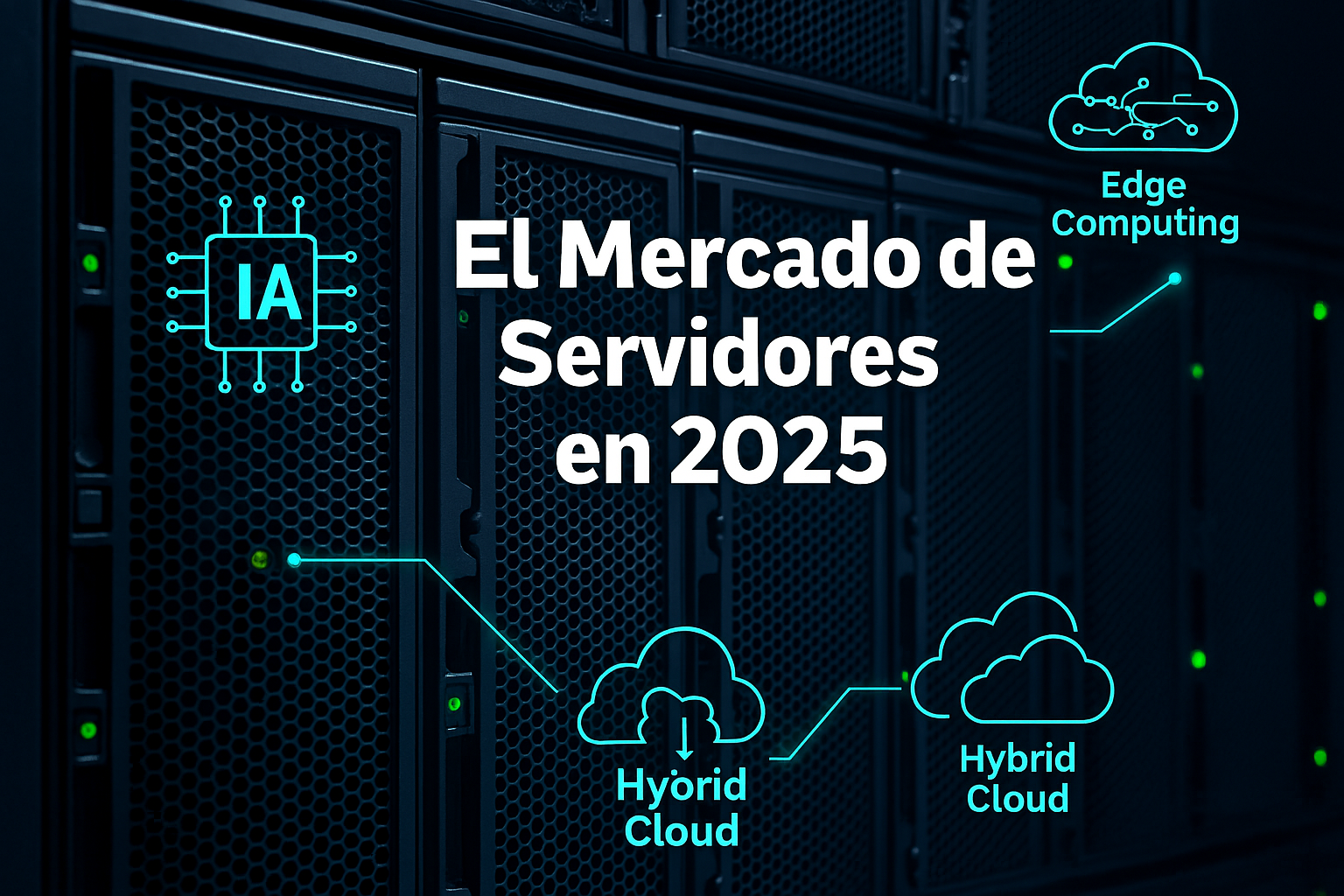
In 2025, the server market is undergoing an unprecedented transformation. Driven by artificial intelligence (AI), the growth of edge computing, and the consolidation of hybrid cloud, this sector is projected to reach a value of $366 billion by the end of the year. This 44.6% growth compared to 2024 marks a milestone in the evolution of global technology infrastructure.
According to IDC’s Worldwide Quarterly Server Tracker report, the first quarter of 2025 saw a market volume of $95.2 billion, representing a year-over-year increase of 134.1%, the largest ever recorded. This surge is driven by the growing demand for real-time data processing, the expansion of cloud services, and the widespread adoption of AI-based technologies.
Artificial Intelligence and GPU Servers
One of the main drivers of growth is the adoption of GPU servers optimized for AI workloads. Companies like NVIDIA have launched new 2U models with RTX PRO 6000 series cards, designed for high-performance environments and parallel processing. These servers enable large-scale training of language models, predictive analytics, and computer vision.
Edge Computing: Processing at the Edge
Edge computing has established itself as a key solution for reducing latency and improving operational efficiency. By processing data near its source—for example, on IoT devices or 5G networks—companies can make real-time decisions without relying exclusively on the cloud. This is especially relevant in sectors such as healthcare, Industry 4.0, and logistics.
Hybrid Cloud and Security
Hybrid cloud continues to gain traction as the preferred model for businesses seeking flexibility, scalability, and control. By combining on-premises environments with public and private cloud services, performance is optimized and security is strengthened. By 2025, it is expected that more than 60% of medium and large organizations will adopt hybrid architectures for their servers.
Sustainability and Energy
Data center energy consumption is a growing concern. Google, for example, has announced that its servers will be powered by SMR nuclear reactors starting in 2030, as part of its sustainability strategy. Meanwhile, by 2025, many companies are investing in liquid cooling and energy efficiency solutions to reduce their carbon footprint.
Cybersecurity in Server Infrastructure
With the increasing complexity of infrastructures, cybersecurity has become a critical priority. Threats to servers, such as ransomware, DDoS attacks, and firmware vulnerabilities, have led manufacturers to integrate additional layers of protection, such as dedicated security chips, multi-factor authentication, and real-time monitoring.
Impact on Businesses
Organizations that invest in modern servers gain significant competitive advantages:
– Faster data processing and analysis.
– Reduced operating costs through automation.
– Scalability to adapt to peak demand.
– Improved customer experience thanks to faster and more personalized services.
Future Trends
Among the trends that will shape the future of the server market are:
– Serverless computing: serverless execution models that optimize resources.
– Advanced virtualization: higher density of virtual machines per server.
– Autonomous AI for server management: predictive maintenance and autoscaling.
– Blockchain integration: for data traceability and security.
Source: www.hateltech.com