
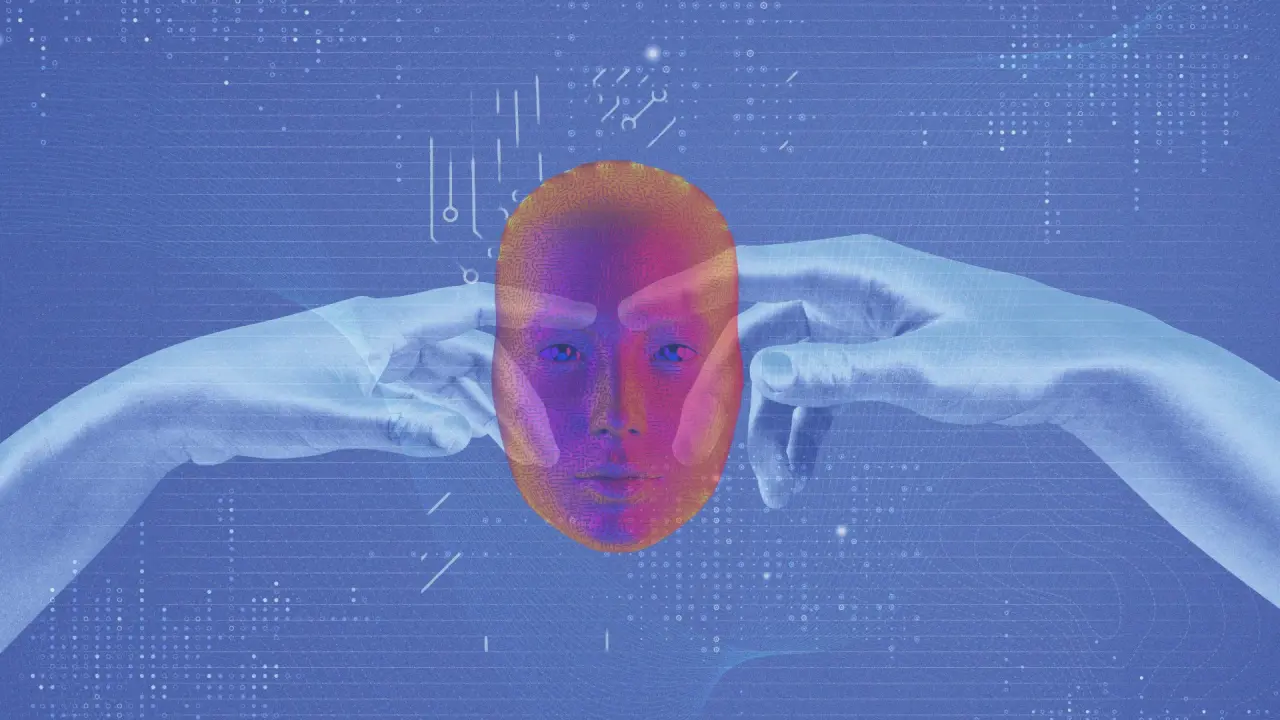
Has generative AI gotten out of hand?
Has generative AI gotten out of hand? These real-world cases prove that it has.
Since 2019, examples of the misuse of generative artificial intelligence have increased, something that could even escape human control.
Generative artificial intelligence, specifically, is barely a decade old as we know it, although its applications are already numerous, from chatbots on websites to tools in all kinds of areas.
It’s practically everywhere, although its beginnings weren’t easy. The first «assistant» in history arrived in 1966 with the name ELIZA, a therapist chatbot created by the Massachusetts Institute of Technology (MIT).
Later, others were also proposed, such as Parry, an artificial companion that could converse with ELIZA, although always within professional settings; Parry was a chatbot with paranoid schizophrenia.
The real advances would come with some important figures, such as Geoffrey Hinton, known as the «father of modern AI,» for his work in developing artificial neural networks that mimicked the functioning of the human brain.
Of course, everything escalated and reached a mass audience with the launch of ChatGPT by OpenAI in 2022. Despite the advantages of generative AI, the language models (LLMs) that power it continue to be used for purposes that disregard ethics, as is the case with some technologies.
Neither face nor voice are reliable anymore. Back in the summer of 2019, The Wall Street Journal published an example of the use of voice cloning to impersonate another person, in a headline that described this cybercrime as «unusual.»
The case received significant media attention, as it affected the identity of the CEO of a UK energy company by using AI to clone his voice and defraud approximately €220,000.
In just six years, the cloning of personal and vital data as important as voice or face has only improved, to the point of making the deception difficult to detect. Although these and subsequent methods had many limitations, amplified by the lack of research in the specific field of generative AI, as well as more realistic solutions than a simple chatbot that usually responds with questions.
Source: www.computerhoy.20minutos.es