
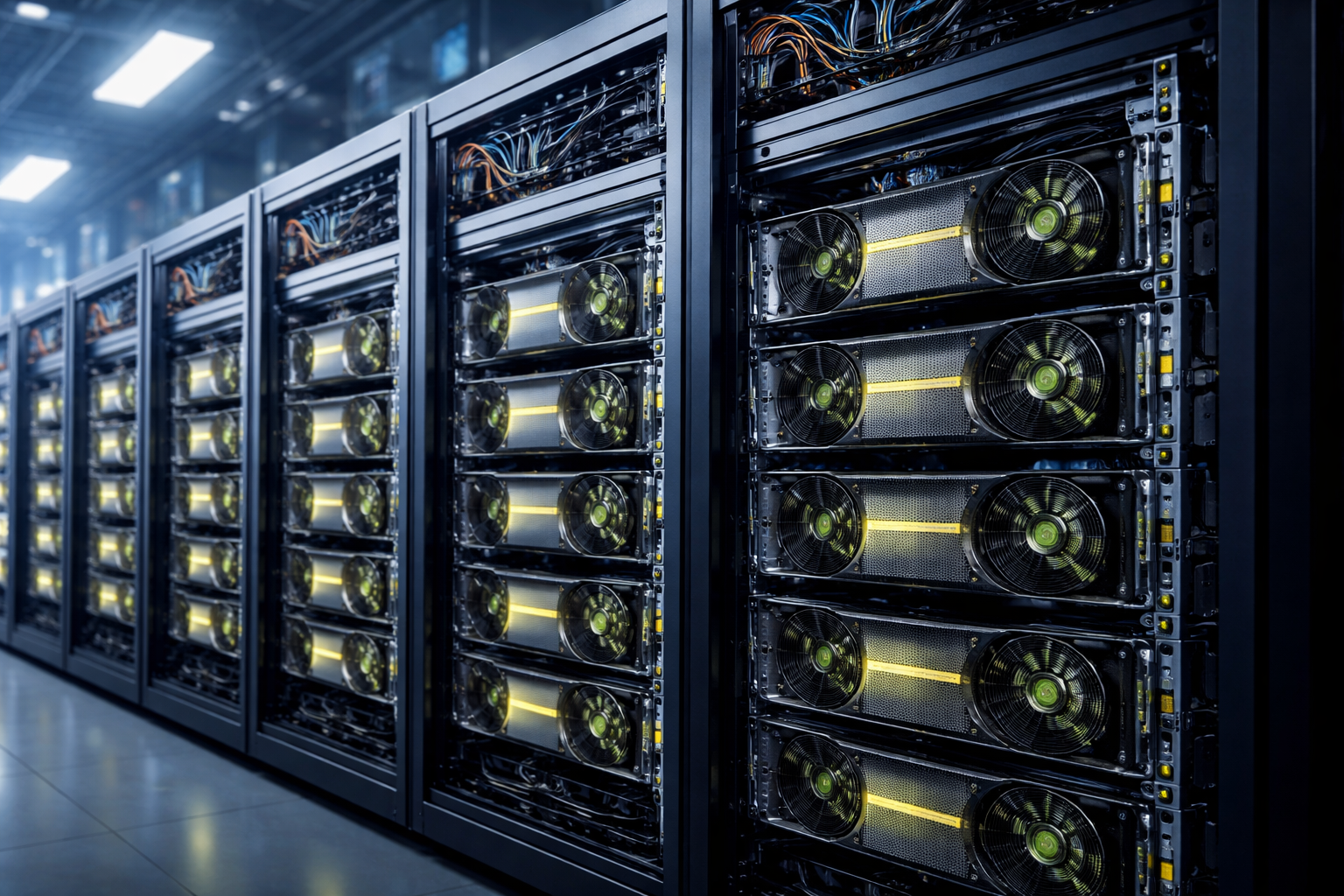
Dedicated servers for AI workloads: performance, control, and scalability
Why AI workloads demand specialized server infrastructure
Artificial intelligence workloads place unique and sustained pressure on server infrastructure. Unlike traditional web or database hosting, AI models require intensive parallel processing, high memory bandwidth, and predictable performance under constant load. Training and inference tasks generate massive volumes of data movement between CPUs, GPUs, memory, and storage. Shared or virtualized environments often introduce latency, resource contention, and throttling that directly impact model accuracy and processing time.
Dedicated servers provide isolated hardware resources that eliminate these risks. By allocating the full compute stack to a single workload or organization, dedicated environments ensure consistent performance and full utilization of high-value components such as GPUs, NVMe storage, and high-speed networking. This level of control is essential for companies running machine learning pipelines, natural language processing systems, or real-time analytics platforms.
Hardware optimization and performance advantages
One of the primary benefits of dedicated servers for AI workloads is the ability to customize hardware configurations. Organizations can select multi-core processors optimized for parallel tasks, large RAM capacities for in-memory datasets, and GPU accelerators designed for deep learning frameworks. Storage architecture can also be tailored, combining NVMe drives for fast access with scalable storage pools for large training datasets.
This optimization directly translates into faster model training cycles and more efficient inference. Dedicated servers avoid the noisy-neighbor problem common in shared environments, allowing AI applications to run at peak efficiency without unpredictable slowdowns. For enterprises working under strict performance targets or service-level agreements, this reliability is a critical operational advantage.
Security, compliance, and data control
AI projects frequently involve sensitive data, including proprietary algorithms, customer information, or regulated datasets. Dedicated servers provide a higher level of security by isolating workloads at the hardware level. This isolation reduces attack surfaces and simplifies compliance with data protection frameworks and industry regulations.
Full administrative access also enables organizations to implement custom security policies, encryption standards, and monitoring tools. Unlike shared infrastructure, where security controls are often standardized, dedicated environments allow teams to align server configurations precisely with internal governance and compliance requirements.
Scalability and long-term cost efficiency
While cloud-based solutions offer rapid scalability, dedicated servers deliver predictable costs and performance over time. For sustained AI workloads, especially those running continuously, dedicated infrastructure can be more cost-effective than pay-as-you-go models. Organizations can scale vertically by upgrading hardware or horizontally by adding additional servers as workloads grow.
This approach supports long-term AI strategies by providing a stable foundation for experimentation, deployment, and expansion. As models evolve and data volumes increase, dedicated servers offer the flexibility to adapt infrastructure without sacrificing performance or control.
Source: TechTarget