
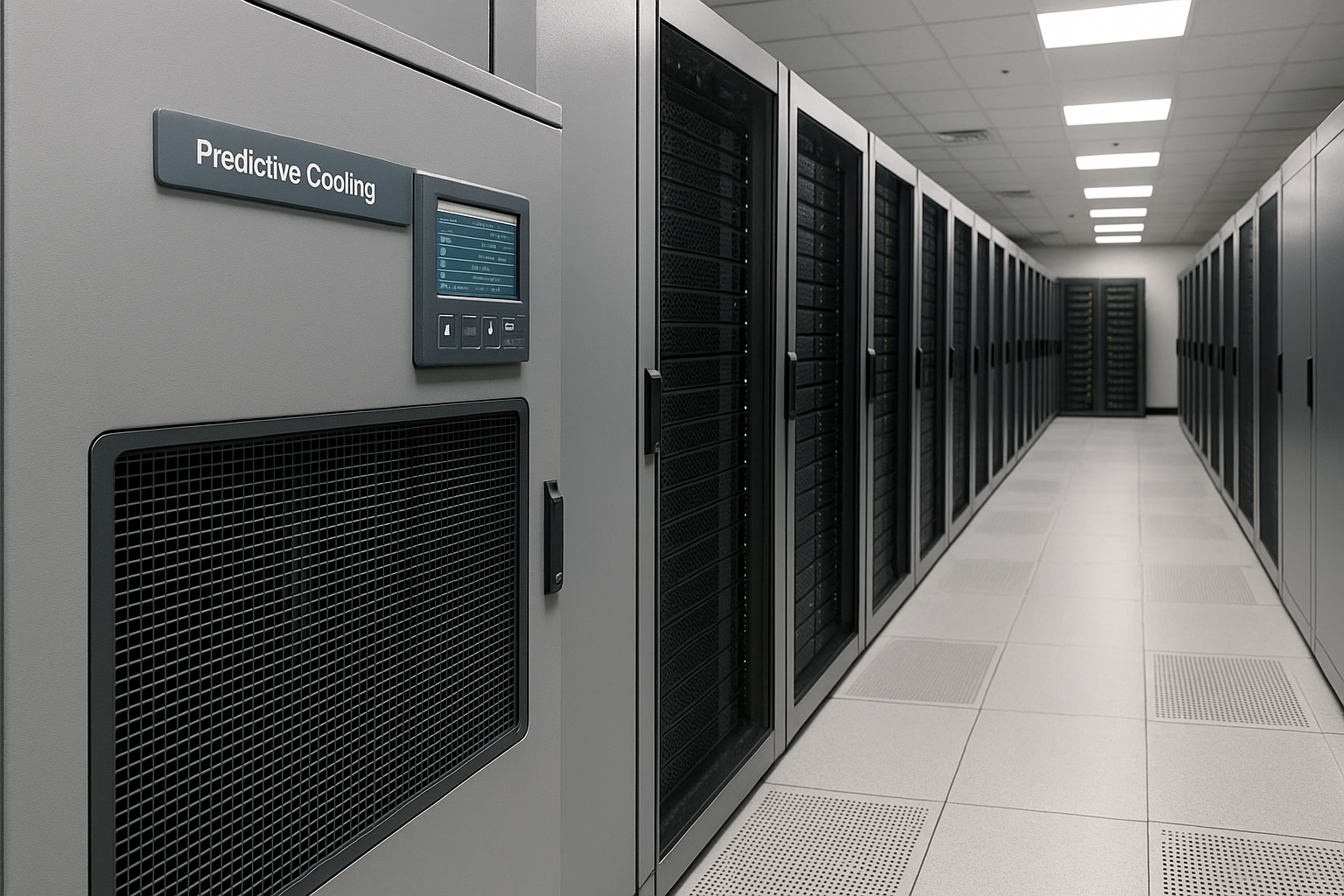
How Predictive Cooling Improves Data Center Efficiency
How Predictive Cooling Improves Data Center Efficiency
Why next-generation cooling is essential
Predictive cooling is reshaping data center operations by introducing a proactive approach to thermal management. Instead of relying on reactive adjustments, modern systems forecast temperature changes based on server activity and environmental conditions. This allows cooling equipment to respond early, maintaining stable performance even as workloads fluctuate. By eliminating abrupt thermal shifts, facilities experience fewer performance drops and more consistent uptime across dense computing environments.
Data-driven cooling that reduces energy waste
Energy consumption remains one of the highest expenses in any data center. Predictive cooling helps control these costs by optimizing airflow and power distribution using analytics. The system adjusts cooling configurations according to projected heat levels rather than running continuously at maximum output. This prevents overcooling and reduces unnecessary energy use. With more precise distribution, temperature hotspots become less common and equipment operates under more stable conditions, improving overall efficiency.
How predictive systems improve hardware longevity
Server components face significant stress when exposed to large temperature variations. Predictive cooling mitigates this by maintaining smoother thermal cycles. When the system anticipates increased load, it adjusts distribution gradually, avoiding sudden changes that can accelerate hardware degradation. This leads to fewer failures, reduced maintenance interventions and improved lifecycle performance. For expanding facilities, maintaining reliable hardware becomes essential for meeting growing processing demands.
Scalable thermal management for modern infrastructures
As AI processing, cloud computing and real-time applications continue to grow, data centers require adaptable cooling solutions. Predictive cooling supports scalability by adjusting to shifting workloads without the need for major structural changes. Algorithms refine heat maps over time, ensuring cooling distribution remains aligned with operational demands. This approach provides better control over high-density racks and helps facilities increase capacity while preserving energy efficiency.
Source: Data Center Frontier