
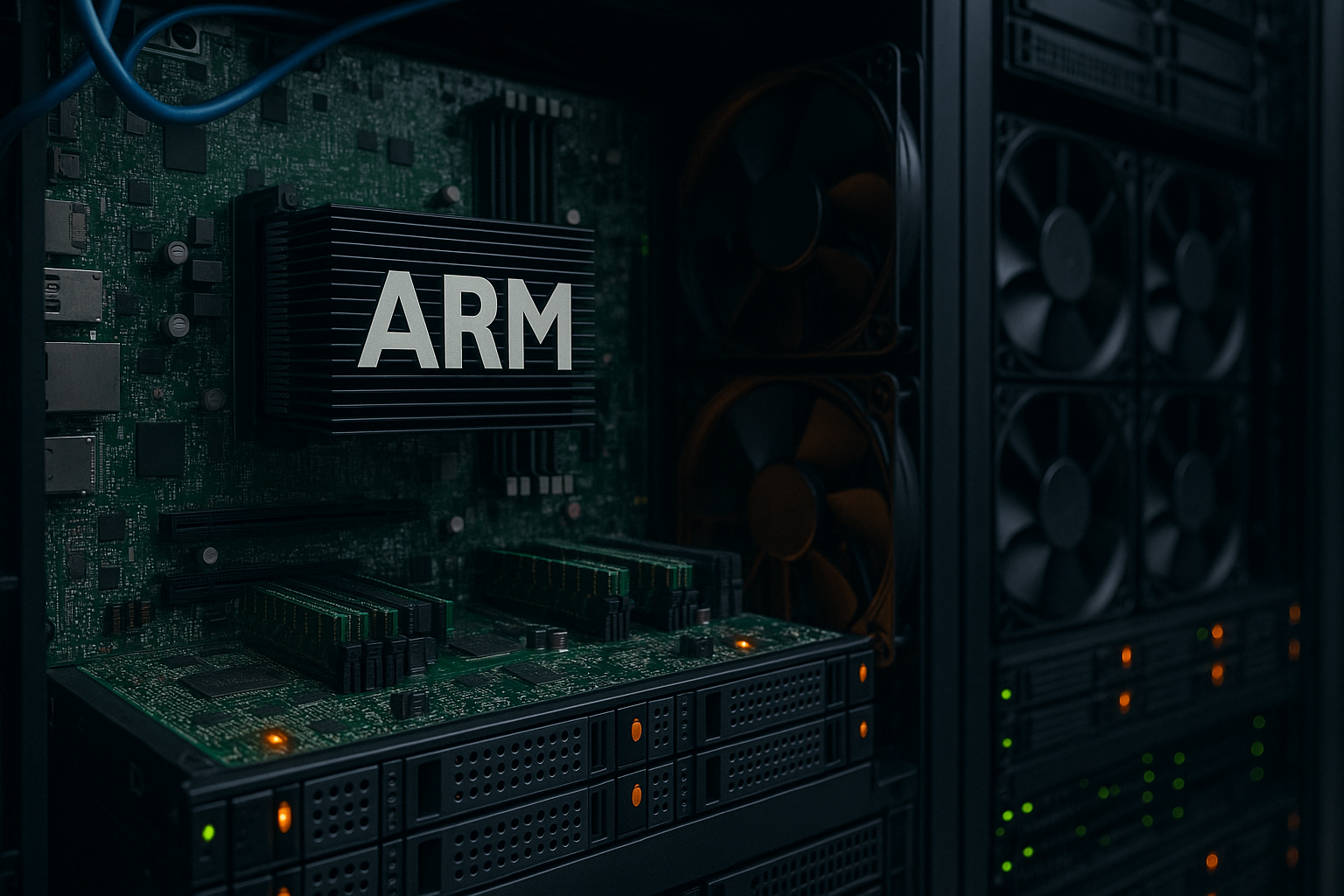
ARM Servers in AI Workloads: Efficiency Meets Performance
The Growing Role of ARM Servers in AI
ARM servers are becoming a cornerstone of modern computing as organizations seek greater efficiency and flexibility. Unlike traditional architectures, they are designed to handle parallel workloads while consuming far less energy. This makes them especially valuable in AI environments that demand both high performance and cost control. With major data centers adopting ARM-based infrastructure, the industry is seeing a shift toward more sustainable and adaptive computing models that prioritize power efficiency.
Why ARM-Based Systems Excel in Efficiency
The performance-per-watt advantage of ARM-based systems allows businesses to maximize throughput while reducing operational costs. AI workloads, particularly those involving large-scale data processing and inference, benefit from ARM’s multicore efficiency and thermal stability. In large clusters, this translates to lower energy consumption, less cooling demand, and a smaller environmental footprint. For companies running continuous machine learning operations, ARM servers offer a practical path toward sustainable scalability.
Balancing Power and Scalability
What sets ARM servers apart is their scalability. Instead of relying on a few high-performance machines, organizations can deploy clusters of smaller servers that work collaboratively. This approach supports distributed AI training and edge computing while maintaining consistent output. When combined with GPUs or specialized accelerators, ARM servers can deliver remarkable computational strength across diverse AI applications—from real-time analytics to autonomous systems.
Shaping the Future of Data Centers
The continued evolution of ARM architectures is reshaping data center design. As AI workloads become more complex, the need for efficient, flexible systems will only grow. ARM’s lightweight, modular structure supports hybrid environments that blend on-premise and cloud resources seamlessly. Looking forward, innovations in ARM chips optimized for AI acceleration will further enhance performance while keeping energy use low, setting a new standard for intelligent, sustainable computing.
Source: TechRadar